

We Outside
Sports can foster solidarity as easily as division. The New York Knicks’ run feels like a welcome reminder of the former.

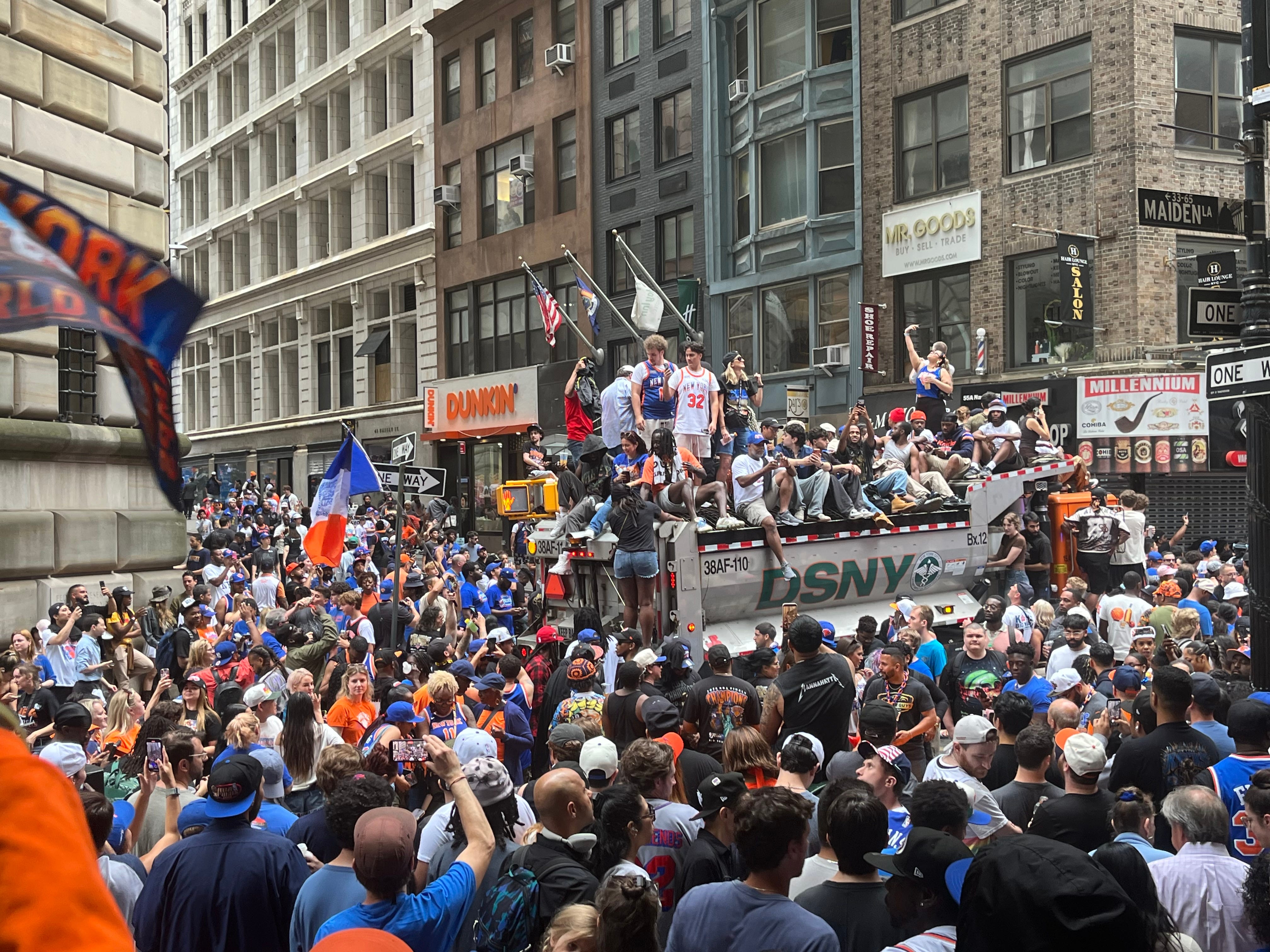
I grew up in New York City, but I’ve never seen the city united behind a single cause.
And while recency bias is a real thing, I still don’t think I’ve ever seen anything quite like what I’ve seen unfold in New York City over the past few weeks.
I just moved back to the city after an academic year as a Knight-Wallace Fellow at the University of Michigan - time I spent focused on how sports can build a sense of community. But we live in a world where dark political and corporate entities have increasingly taken over the games we love - not to mention their many intersections with violence and toxic masculinity. Because of that, I spent a lot of the year doubting whether a kumbaya message around social cohesion is the most relevant place my gaze should be focused when it comes to sports. In June of 2026, though, it definitely has been. At least here in New York.
As the Knicks looked poised to complete a 4-0 sweep of the San Antonio Spurs in the NBA Finals, a now viral video captured MD Ahnaf Hossain, a 23 year old Bangladeshi-American summing up the energy better than anyone:
“My Mayor Muslim, My Bagels Jewish, My Christian Dior...Knicks in Four.”
In about five seconds, Hossain seemed to somehow create a rallying cry for the city that celebrated its religious diversity, one of its most iconic culinary offerings, and its position as one of the fashion capitals of the world. And when the Knicks ended up needing an extra game to clinch the championship, he was quick on his feet with a tweak, recalling Pope Leo XIV posing with a Knicks jersey last year:
“My Mayor Muslim, My Bagels Jewish, The Pope’s On Our Side…Knicks in Five.”
I’d say we should make him New York City’s Poet Laureate. But the fact that the video was posted under the branding of Kalshi, the predatory, right-wing adjacent prediction-market company has made some rightly wonder how spontaneous the original video really was.
This isn’t just about one guy, though, because even if Kalshi did have their fingerprints on the Hossain video, his verve was evident in what felt like almost every one of this city’s 8.58 million residents in the past few weeks. And thankfully not just in the way that’s seen in the Sidetalk style videos outside Madison Square Garden that often have an air of toxic masculinity to them.
In a city where the majority were priced out of buying tickets to the actual games, people came together at massive watch parties with less aggressive energy - in bars and parks, as well as impromptu gatherings in the street - aided by laptops and projectors. Restaurants and bakeries have offered Knicks themed menu-items, including suspect-looking bagels and donuts. Celebrities like Spike Lee, Timothee Chalemet and Mariska Hargitay have lived and breathed every moment as if they were regular every day plebs; to be clear, their ability to attend every home, even away, Finals game proves they are not.
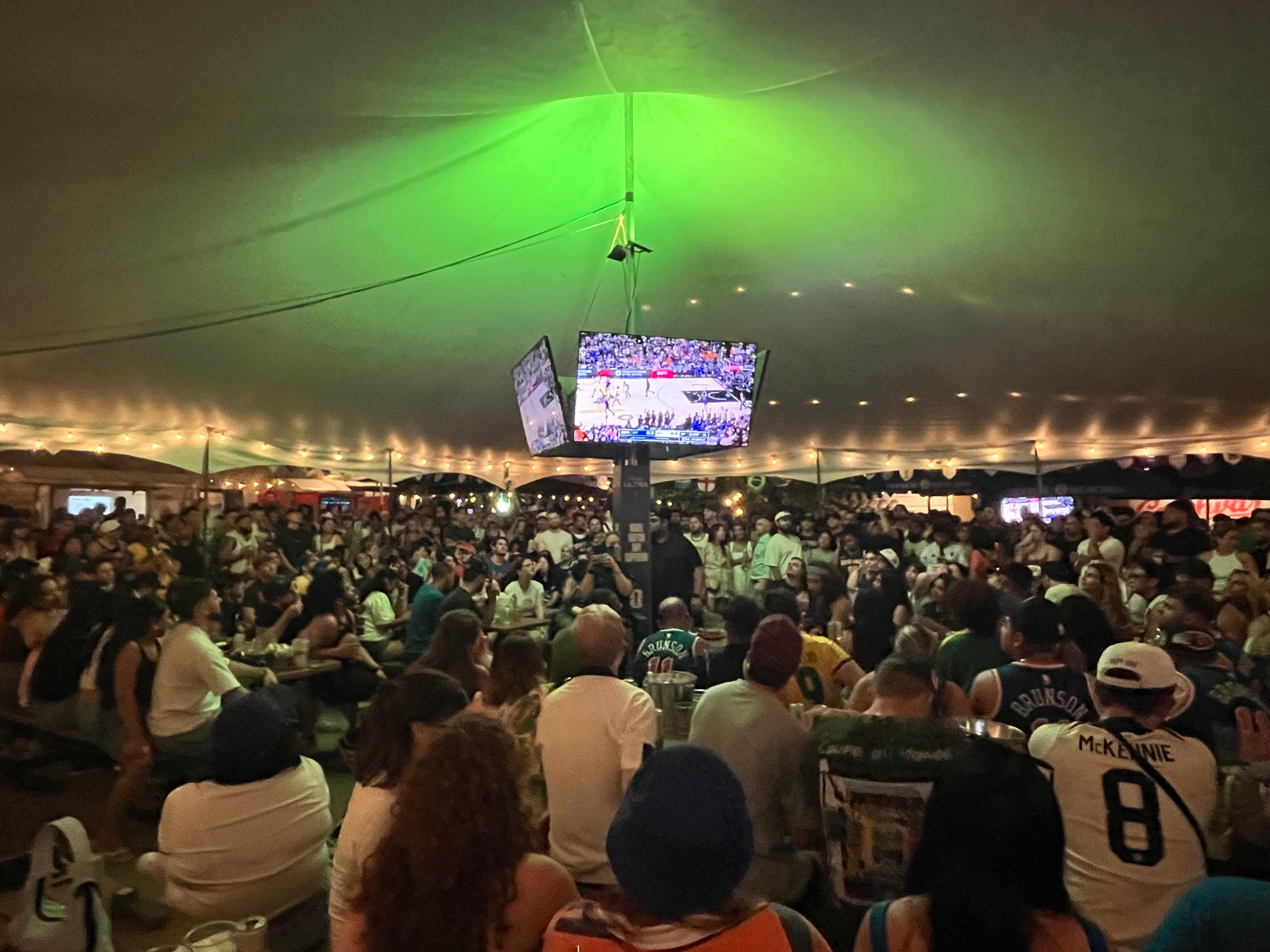
In an attempt to fully experience the Finals with real everyday New Yorkers though, as well as the vast extent to which the Knicks had taken over the city, I made it a personal mission to watch the Finals in as many neighborhoods as possible.
For Game 1, I went up to Inwood at the northern tip of Manhattan - a stone’s throw away from the streetball bastion of Dyckman Park - and a heavily Dominican area. While the Knicks pulled off what would be the first of four improbable comebacks in the series, I dodged potential second-degree burns every two minutes in a sprawling but packed bar, as waiters squeezed by me with hookahs whose coals brushed past the back of my neck.
But it was worth the risk. Because as Jalen Brunson often says, “the vibes were immaculate.” A quick survey of the jerseys in the room showed that the love for Knicks’ Dominican big man Karl-Anthony Towns was high, and helped by an in-house DJ, fans broke into merengue and salsa during timeouts. As I left that night, it was “El Preso” by Fruko y sus Tesos, a Colombian group known for adopting a New York-style salsa into their music, that remained stuck in my head.
A few days later I was about as far from Inwood as I could be while still being in the city - 28 miles away in Coney Island, on the southern shore of Brooklyn. And when the Knicks somehow got over the line following a bizarre mixup between Spurs stars Victor Wembanyama and Stephon Castle, the crowd of largely Puerto Rican and Italian fans erupted in unison and then, almost in one motion started breaking it down to Ja Rule’s “New York.”
By the time of the Knicks’ unforgettable 29 point comeback in Game 4, not even the TV getting stuck before OG Anunoby’s iconic game-winning tip could kill the jubilation people felt in the bar I was watching in the South Bronx. There aren’t too many Indians in the neighborhood, and the bouncer seemed to view me with suspicion when I first got there. By the end of it we were high-fiving and he was slapping me on the back while grinning like a cheshire cat.
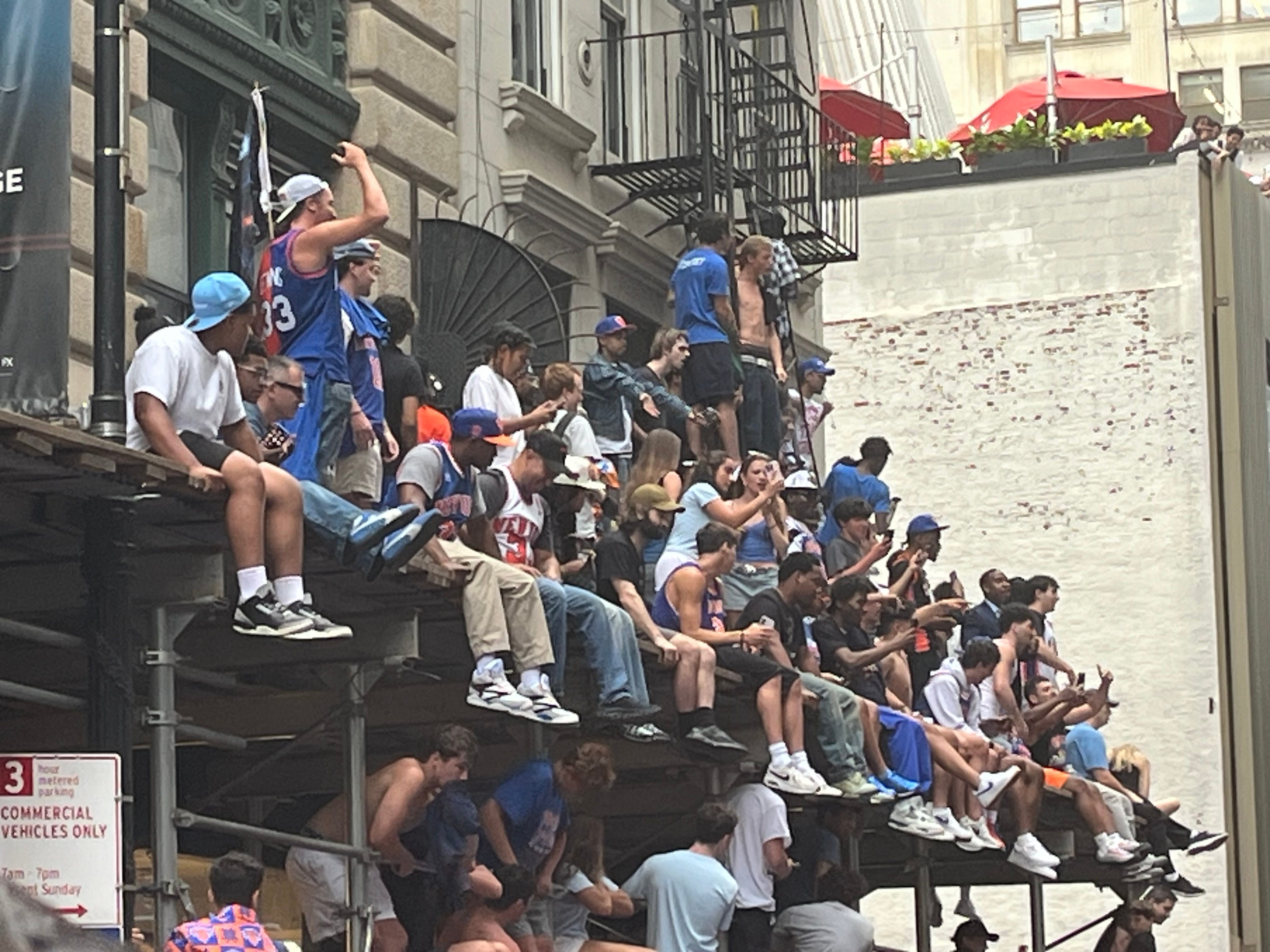
This Knicks run brought together people from all walks of life - regardless of religion, ethnicity, or how long they’ve been here. As Jennifer Lopez’s recent appearance on the show Subway Takes suggests, that last point might actually be the most touchy of them all. To be sure, there will be some who find the “non-native” fans grating and label them bandwagoners. But for the most part, for a moment in time at least, none of that mattered. Lifelong, die-hard Knicks fans could high-five New York transplants who may not have known what the Knicks were three weeks ago and feel nothing but pure joy.
For me, it all comes back to the ideas I’ve been digging into for the past year. Last month I launched a podcast with Simon Kuper and Stefan Szymanski - the authors of the New York Times bestseller, Soccernomics. In The Soccernomics Podcast we’ve been focused on this summer’s World Cup, and recently did a whole episode about how the social cohesion provided by such global tournaments reduces suicides in many countries. You don’t even have to be hosting the tournament, and you don’t have to win either. Just the shared experience of a city or a country watching games together all summer makes people feel a part of something bigger than themselves. And the effect lasts the entire year.
New York City only releases suicide data every few years, so it will be a while before we can see if this Knicks run has causes a similar effect. There have already been suggestions that it did lead to a reduction in crime.
Unfortunately I’m too much of a journalist to ignore that there is a darker side. There always is. Sports can unify, but that can also lead to groupthink and violent behavior. And I’m not just talking about the Knicks fans who burned buses after the Knicks won the title
In their Soccernomics research, Simon and Stefan found that while suicides went down, domestic abuse and assault when up. Similarly, the videos I saw of Knicks fans beating up Spurs fans after Game 4 and demanding they take off their jerseys were deeply disturbing. So was much of the vitriol, and physical objects - including an egg - thrown Wembanyama’s way.
In those moments, Knicks unity spilled into the “othering” of those who weren’t a part of the family. This kind of dangerous groupthink was also on display during another period a lot of people have been citing as the last time New York was this united - after 9/11, when Sikhs and Muslims were also targeted as part of the energy that had built in the city. People like Fat Joe, either forget, or never understood the dark side of it all.
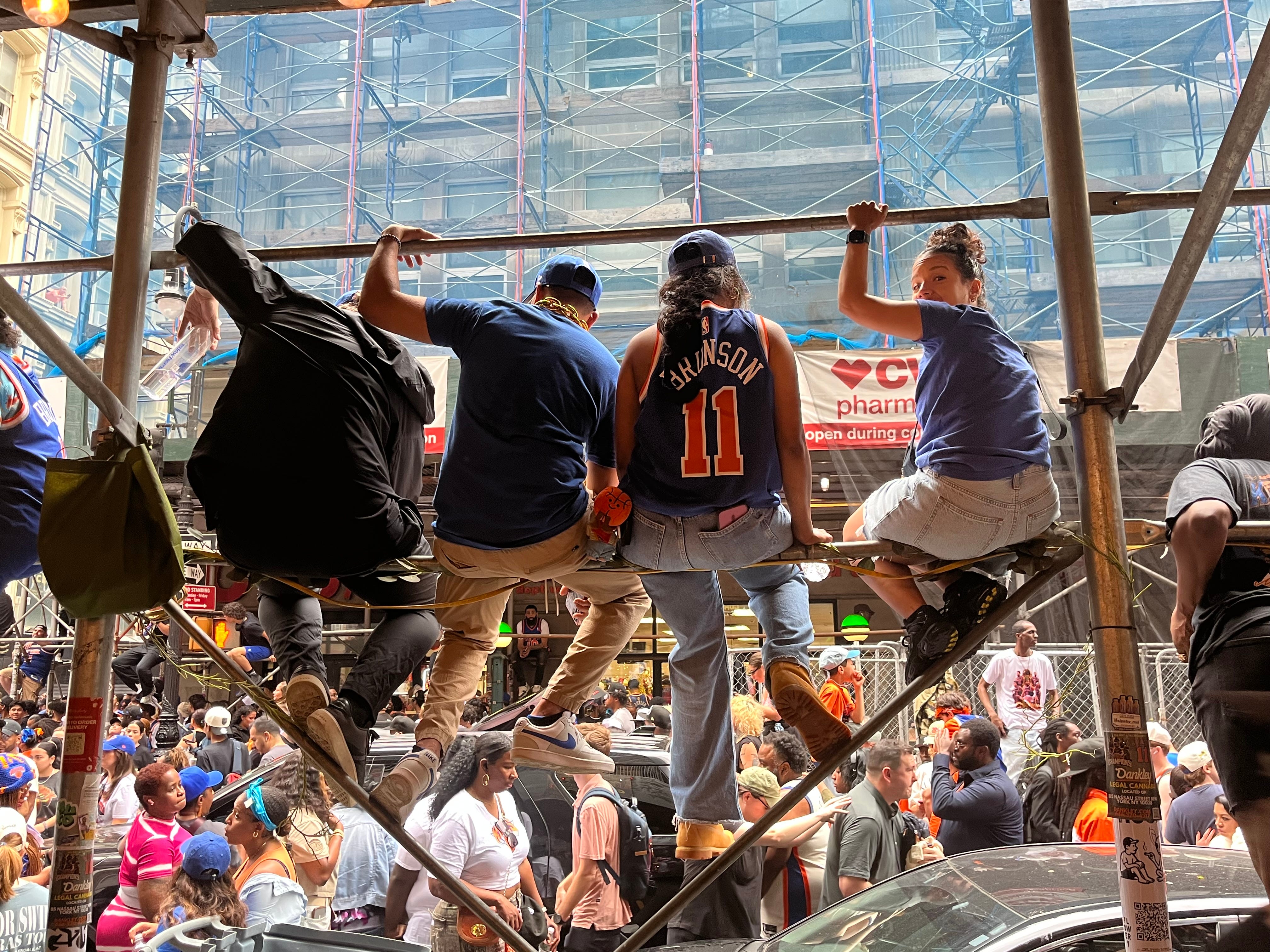
For the most part though, New York has been largely joyous in the past few weeks, some of my favorite moments have been spontaneous actions in the streets. On Thursday, as an estimated 2 million people flocked to the Financial District for the city’s largest ever ticker-tape parade, many were way too far to actually see their heroes go down Broadway. But they stayed and partied in the nearby streets for hours, having the time of their lives.
As New York rapper Jadakiss once said - and it’s a phrase that’s had a resurgence across the city this year after Mayor Zohran Mamdani alluded to it in his January inaugural address: “We outside.”
 | A guest post by
|