

The Hosts
Mexico may still emerge as the true heartbeat of this World Cup, bringing the passion, football culture, and lived understanding of the game the U.S. and Canada still struggle to match.

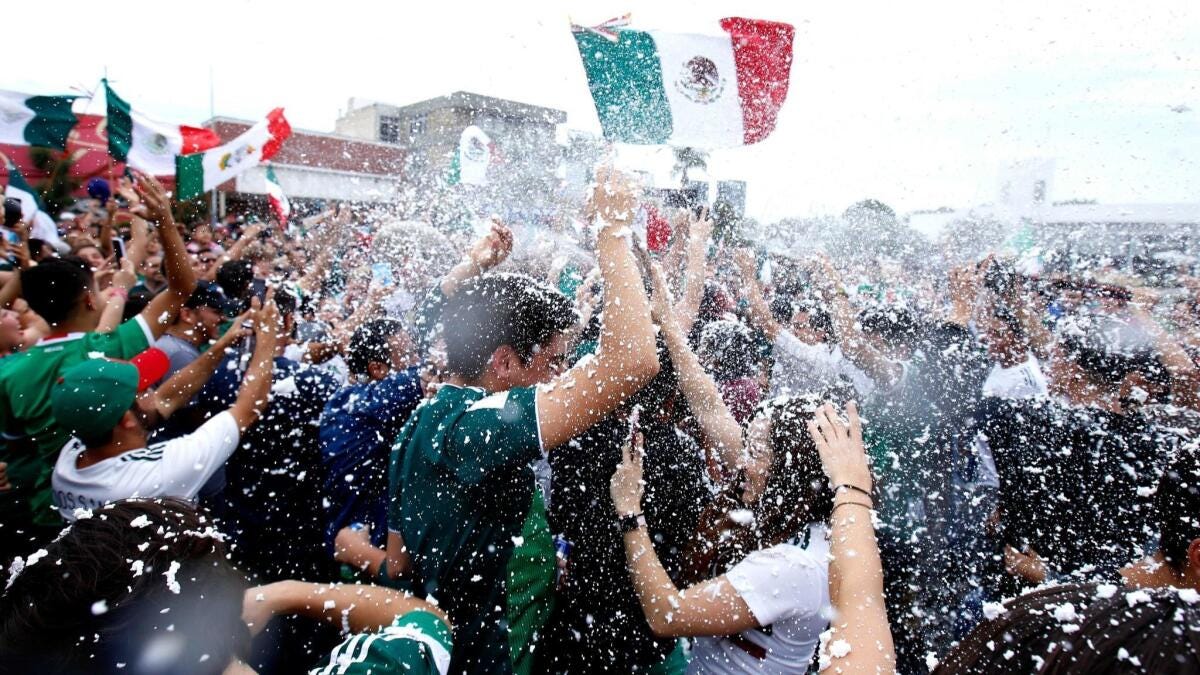
Writer Juan Villoro once captured Mexico’s relationship with football perfectly: “If fandoms decided the World Cup, Mexico would certainly reach the finals of every single tournament.” He is not wrong. Mexican fans consistently rank among the largest groups traveling abroad for the World Cup, no matter where it is held. Now imagine that passion directed toward the national team, known as El Tri for the three colors — green, white and red — of our flag, on home soil, with the entire world watching in the age of social media. It is going to be incredible.
In many ways, this is a perfect match: the World Cup returning to a country with both a deep, natural passion for football and a rich hosting history as hosts. First in 1970 and again in 1986.
And beyond the game itself, Mexico offers something special to the world: extraordinary food, vibrant culture, and people whose warmth will define the tournament experience as much as the football.
Like people have done in the past (particularly in South Africa 2010 and Brazil 2014), some Mexicans are using the tournament to highlight problems – teacher salaries and the families of the disappeared at the hands of the cartels and the state – as well as the unfinished airport outside Mexico City; as in previous cases, the World Cup will happen either way.
But that is not the most important part. For a new generation of Mexicans — my generation — this will be our chance to experience what it means to host football’s greatest tournament. Mexico has staged major events before: NBA and MLB games, Under-17 FIFA World Cups, and the Mexico City Formula One Grand Prix, which has won the award for best crowd every year since returning in 2015. But the World Cup exists on another level entirely.
I grew up hearing stories from my parents, grandparents, and others about the magic of the 1970 and 1986 World Cups. One person I will always remember is Javier, who worked for the gas company in my neighborhood. He used to tell me stories about those tournaments, and the one that stayed with me most was how he quit his job for three months just to spend his days near Estadio Azteca during the 1986 World Cup. He eventually got his job back, but that story tells you everything about the depth of football passion in Mexico.
Sadly, Javier will not be here to see this tournament, but I know he will be supporting with that same enthusiasm from wherever he is.
Javier’s story is not unique; back then, ticket prices were affordable for anyone.
As for our visitors, the national teams setting up their base camps in Mexico have started to arrive. South Africa, Tunisia, Colombia, Iran, South Korea, and Uruguay. Japan is using Mexico as a warm-up base but will cross the border and be based in Knoxville, Tennessee, once the tournament begins. Three Mexican cities (Mexico City, Monterrey, and Guadalajara) will host a total of thirteen games.
Mariachi music, photos with government officials in sombreros, and football-literate crowds at their practices are what the visitors have been experiencing. Even if our own national team plays against them, the spirit of camaraderie is built on the bond of the beautiful game—the universal language. The national teams that came for the additional rounds of qualifiers (DRC and Iraq especially) have already gotten a taste of Mexican hospitality and camaraderie. Once the tournament ramps up later this week, locals’ passion and love will only intensify. It is telling that, in the face of US inhospitality, Iran asked to stay in Mexico and cross over into the US to play games and then return to Mexico right after.
South Africa’s team, Bafana Bafana, which is staying in Pachuca in the state of Hidalgo, the Mexican birthplace of football, has already seen what this hospitality looks and feels like.
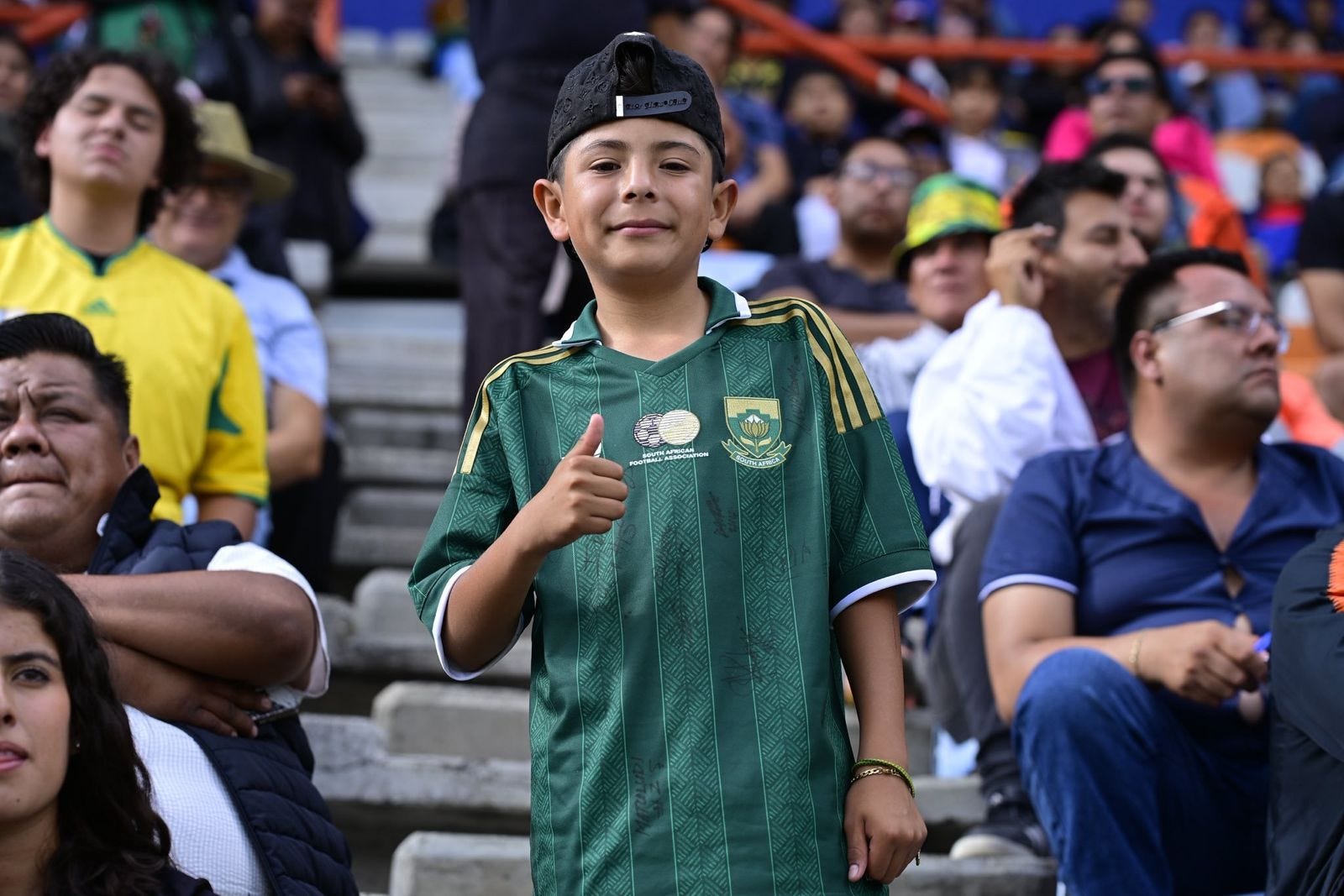
The local professional football club, Pachuca CF, released a welcoming video. A local Mexican TV channel highlighted the story of Luchito, a local boy who waited for Bafana with a hand-painted South African flag and his Panini sticker book. He wanted the team to autograph it.
In videos circulating online, you see coach Hugo Broos — who played for Belgium at the 1986 World Cup — embrace the fan, pose for photos, and present him with a new South Africa away jersey. One by one, the players sign it and take turns taking pictures with him. Since then, Mexican fans have continued showing up at Bafana Bafana training sessions.
It is hard to imagine teams based in the United States experiencing anything similar. Think of Egypt camped in Cleveland, Ohio: most locals probably do not even know the team is there, let alone care. By contrast, there are videos of Japanese players casually visiting local malls in Mexico, fully immersed in the surrounding atmosphere.
Uruguay and Colombia, both expected to make deep tournament runs, will likely enjoy this experience the most. Tunisia, meanwhile, will play its opening two matches in Mexico, including a highly anticipated clash with Japan that will mark the 1,000th World Cup match in history.
This is the magic of the World Cup, something that has long eluded the tournament’s main host, the United States. The country may offer world-class stadiums and training facilities, but it still lacks the essence required to truly host football’s biggest event. As the tournament expands, the US seems to take the World Cup for granted; Mexico never does. When it comes down to it, the United States and Canada still lack something quintessential to hosting the tournament: genuine passion for, and understanding of, the game.
Even if Mexico hosts only a handful of matches, the passion will be unrivaled. Fans traveling there will discover that Javier’s story is far from unique; millions like him give the World Cup its soul. Viewers watching from afar may well see the opening match at the Azteca and wonder why the final is not being played there.
Actor Diego Luna, who starred alongside Gael García Bernal as one of two football-loving brothers in the 2008 classic “Rudo y Cursi,” recently released another football-centered film, “Mexico 86,” on Netflix. Like so many Mexicans, his love for the game runs deep. He perhaps says it best: “Football is a passion that is with you until the end; it doesn’t understand age or social status; it’s a shared common that we all enjoy.”
 | A guest post by
|
Tunisia got the first win for an African country in worldcup in 1978, against Mexico :)