

Temporary Autonomy
Egypt has qualified for the 2026 World Cup, but one fan group will be absent: Ultras. Banned from the stadium, their activism still haunts the country’s politics.

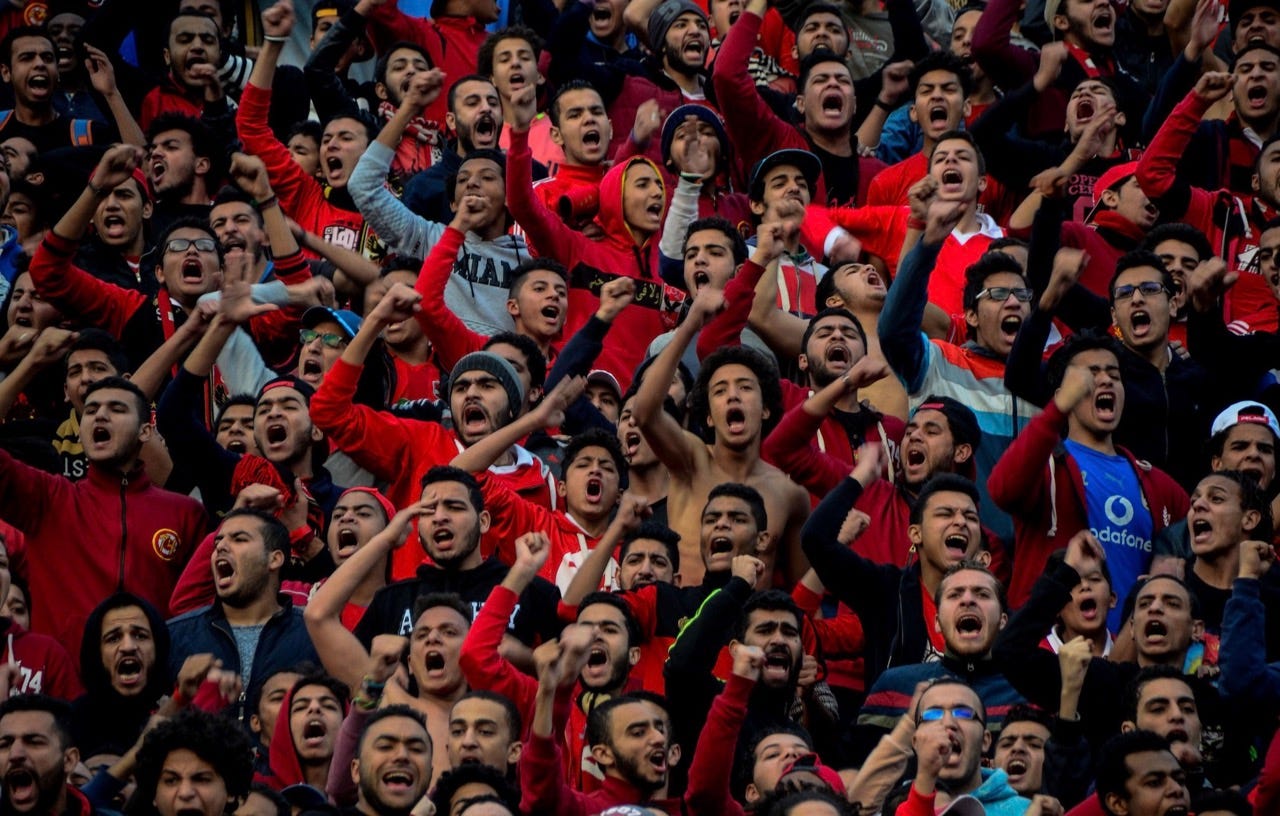
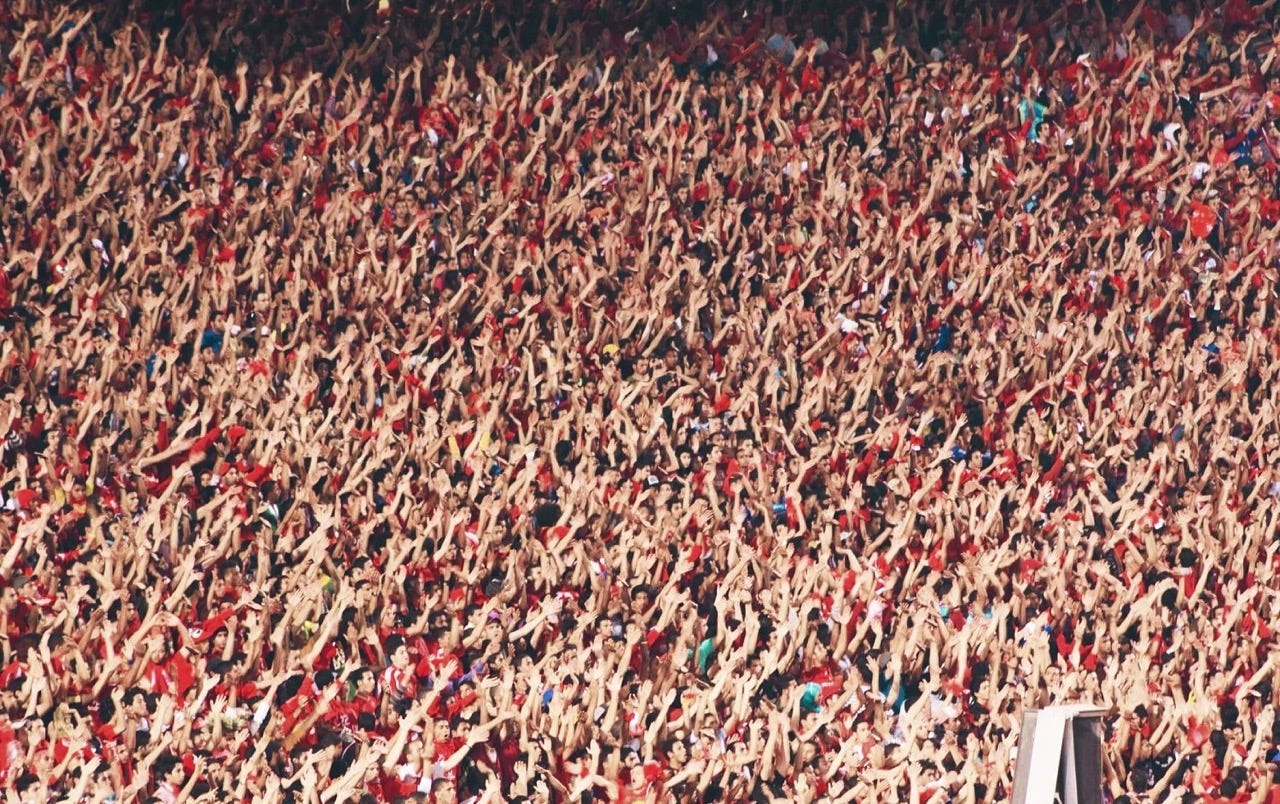
In the realm of formal politics, many Egyptians have long felt uncertain and disillusioned. Political leadership has often been characterized by limited options for meaningful representation, with state actors prioritizing their own power over the needs of the population. This entrenched perception, that political leaders benefit from people’s hardship, has steadily eroded public trust and diminished collective confidence in governance. However, football offers Egyptians a rare and meaningful sense of agency. It manifests in which club to support and how to express that allegiance. Until the state started banning most spectators from games, fans in the stands were able to express their identities and participate in a shared emotional and cultural experience. And it is within this space that football Ultras emerged, as devoted fans and a politically significant collective.
Football in Egypt functions as far more than a sport; it is an entrenched social institution, part of the fabric of life. The vast majority of Egyptians are football followers. If not directly, then through siblings or parents, and support for clubs such as Al Ahly or Zamalek is often inherited across generations, forming part of familial and cultural identity. Yet within this inheritance, there remains space for individual expression. For many, the stadium becomes an arena where nationalism, dignity, brotherhood, and belonging are both performed and sensed. While nearly everyone engages with football in some capacity, the Ultras represent a more distinct and organized subset of supporters, detectable by their intensity, structure, and unwavering commitment.
Ultras are not casual fans. They adhere to a strict code of conduct that governs their participation: they chant continuously for the full ninety minutes regardless of the match outcome, stand throughout the game, travel to both home and away matches, and contribute to highly coordinated visual and auditory displays, including banners (tifos), chants, and songs.
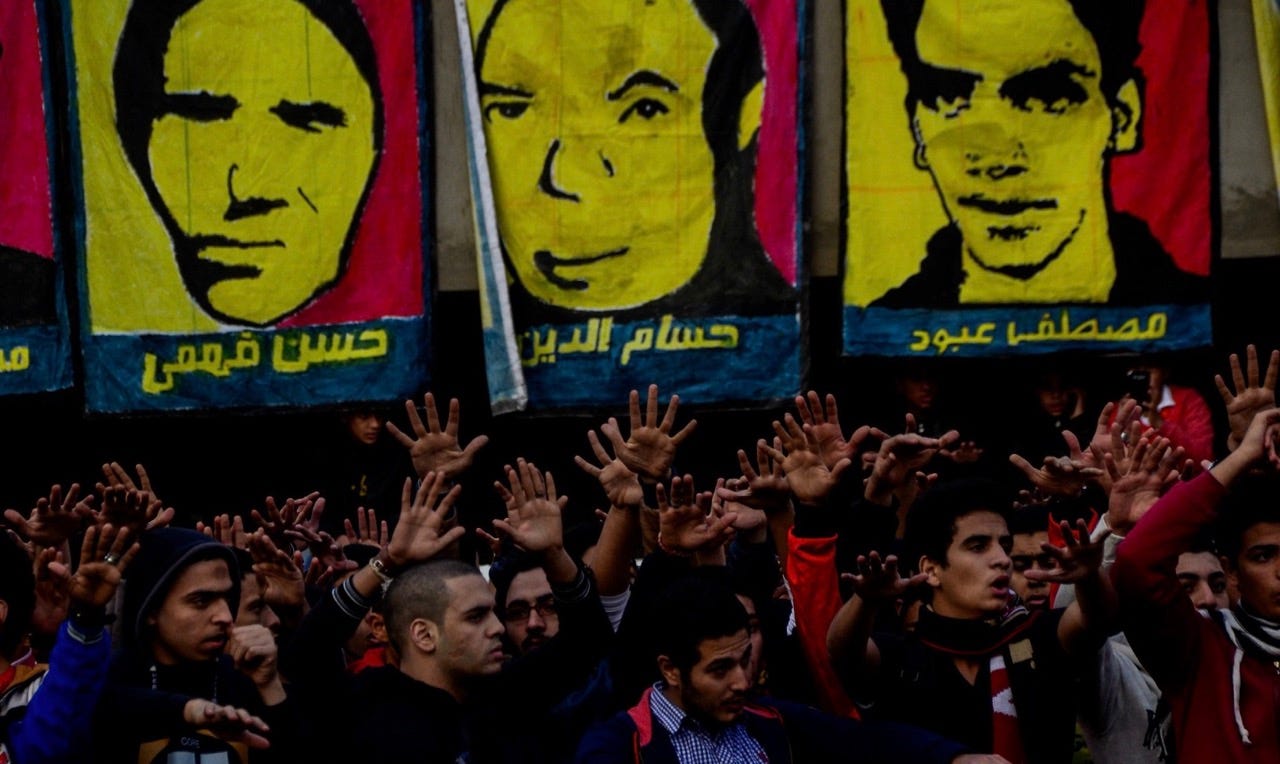
This level of discipline and devotion distinguishes them from ordinary or casual spectators or fans who watch the games on television and go to the stadium occasionally for important matches. Importantly, membership in Ultra groups is not determined by socioeconomic status, age, or religion. Instead, it is grounded in loyalty to your club, to its ethos, and to your brothers (ultras are largely a male domain; Egypt is no exception), all of which produce a powerful collective identity. The Ultras movement in Egypt began to take shape in 2007, most prominently through groups such as Ultras Ahlawy (UA07) and Ultras White Knights (UWK), representing Al Ahly and Zamalek, respectively. These two are the biggest and most successful clubs in Egypt and on the African continent. While both these Ultras groups consistently claimed to be apolitical, their practices and experiences suggest otherwise. Even before the 2011 uprising, which resulted in the end of military rule after 59 uninterrupted years, Ultras were engaged in confrontations with state authority, particularly the police. During the late Mubarak era, the Egyptian regime viewed public assembly as a threat to national security and suppressed any unauthorized gatherings. Football stadiums, however, remained one of the few spaces where mass gatherings persisted.
Inside the stadium, Ultras frequently clashed with police forces. These confrontations were not merely incidental; they cultivated a collective understanding of resistance. Ultras became adept at navigating police tactics, organizing large groups, and maintaining cohesion under pressure. For the duration of a match, they experienced a form of temporary autonomy. In an environment where they outnumbered the police and asserted control over their space, they were a liberated people, unmanaged and free. Over time, they came to see the stadium not just as a place for football, but as a charged space of protest and solidarity. This politicization was further shaped by their engagement with broader regional struggles. Ultras demonstrated visible solidarity with movements such as the Arab Spring uprisings, which at the time took the capital’s main public square, Tahrir, as well as with Palestinian resistance, incorporating these themes into their chants and visual displays. One widely circulated chant emphasized pan-Arab unity and resistance to division. It reflects a political consciousness that extended beyond national borders:
Rulers’ oppression increased and division was a weapon,
The more I hate my brother the more [the rulers] succeed,
They divided us, separated us and our chains increased,
And Arabic, my country’s language, was buried under borders,
And in their media, our past was years of catastrophe,
but read our history and see our resistance to colonies.
I’m Egyptian, Syrian, and the land is Palestinian,
I’m Tunisian, Libyan, and the direction is Saudi,
I’m Bahraini, Yemeni, and the soul is Moroccan,
I’m an Arab revolutionary and I will fight for the cause.
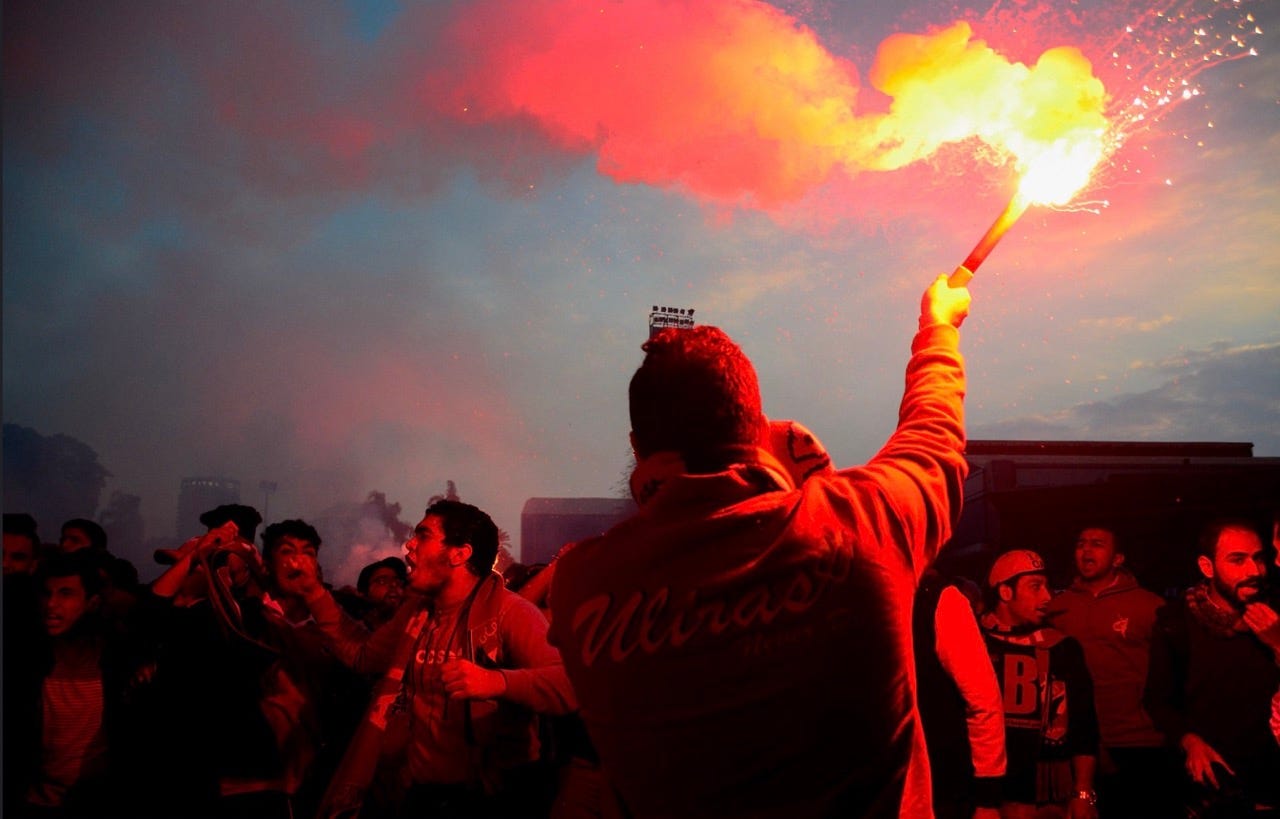
Despite their insistence on being “apolitical,” these multimedia forms reveal an underlying ideological orientation fixed in opposition to oppression and commitment to collective struggle.
Ultras’ involvement in the Arab Spring can be understood through the concept of “transgressive contention,” as theorized by sociologist and political scientist Charles Tilly. This framework describes moments when ostensibly apolitical actors enter the political arena and reshape collective action. Ultras exemplified this process. Their organizational discipline, clashes with the police, and collective identity made them central to the revolution. In Tahrir Square, they coordinated crowds, anticipated police movements, defended protesters, and sustained morale, becoming what some called the revolution’s “military core.”
The revolution reshaped the public framings of Ultras. The Ultras, previously depicted as unruly and disruptive, were now celebrated as protectors and revolutionaries. As the movement grew, Ultras expanded their organizational reach, mobilizing politically engaged youth and becoming one of the largest civic forces in Egypt at the time, second only to the Muslim Brotherhood. (The Brotherhood won elections and President Mohammed Morsi governed for one year before being deposed in another military coup. Since then, Egypt has been governed by the military again.)
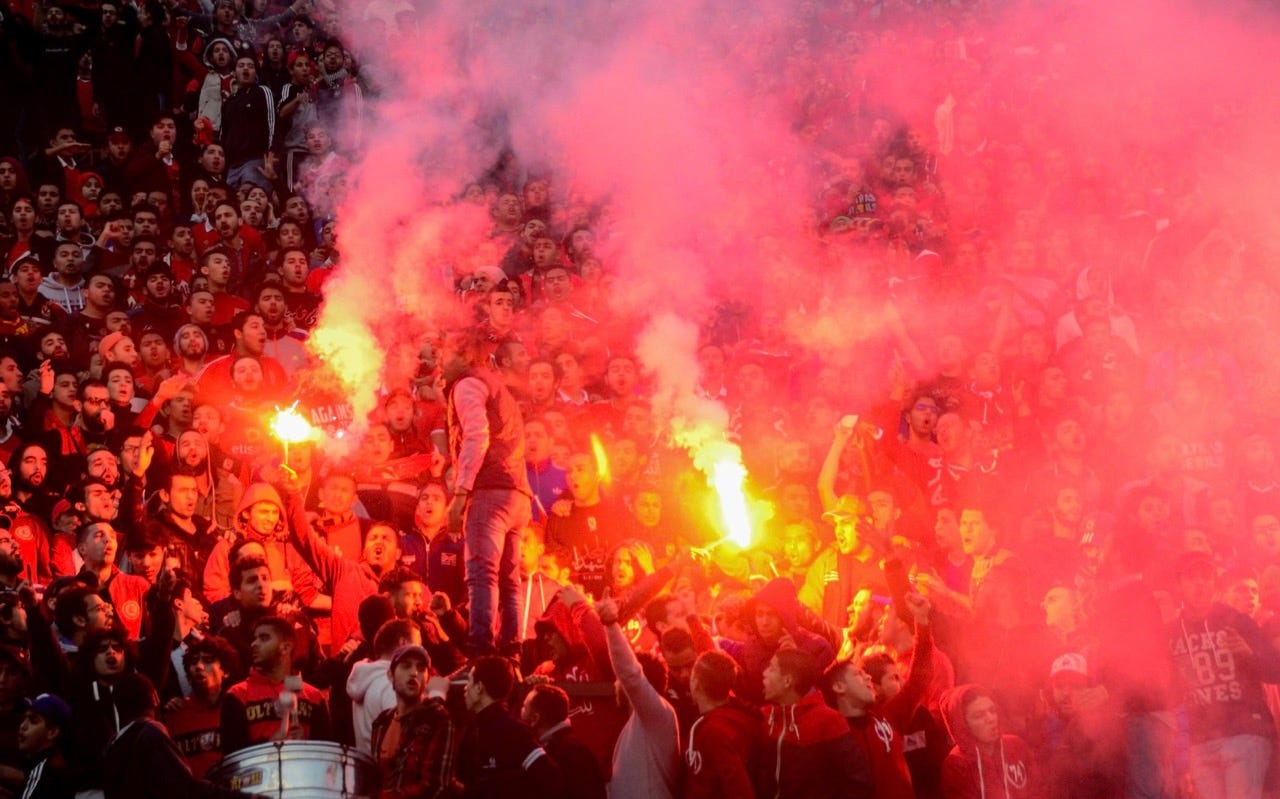
In the period between the ousting of Mubarak and Morsi’s election, the military reacted with severe repression against Ultras. The most devastating example occurred in February 2012 during the Port Said Stadium massacre, where over seventy fans and Ultras were killed after police restricted stadium exits, contributing to a deadly stampede. Widely understood as an act of retribution, the massacre marked a turning point in the state’s approach to the movement. In the years that followed, censorship intensified: the term “Ultras” was banned, their images were prohibited from publication, and courts designated them as a terrorist organization. By 2018, the groups were formally disbanded.
Despite their removal from stadiums, the legacy of the Ultras endures. Their subcultural identity is rooted in Egypt and among diasporic communities. Their trajectory and stadium-to-street pipeline exemplify how spaces of leisure and subculture can become incubators on the frontlines: capable of toppling an authoritarian regime. In the words of “Hekayetna (Our Story)” (translated from Arabic), by Ultras Ahlawy:
Football when we arrived was lies and deception,
It was brain numbing and a shield for the authorities.
They tried to beautify it but it resembled the grief of the country. They did not take account of the thousands in the stands.
We will never forget your past,
You are the slaves of the regime.
And when the revolution came, we went and participated in every city,I will never let you feel safe as an authority and will never forget what you have done to us, I will never allow you to rule us again one more day,
Keep setting your police on us.
They all died with the dream of ending the regimes grip on the country,
Oh SCAF, you bastards.
You sold the blood of the martyrs in return for protecting your regime that you are part of, Oh SCAF you are bastards.
 | A guest post by
|
Amazing piece