

Overturn This
Trump largely ignored the World Cup—until he undercut U.S. soccer and pushed the goodwill its young players had built up against embarrassing "Ugly American" stereotypes.

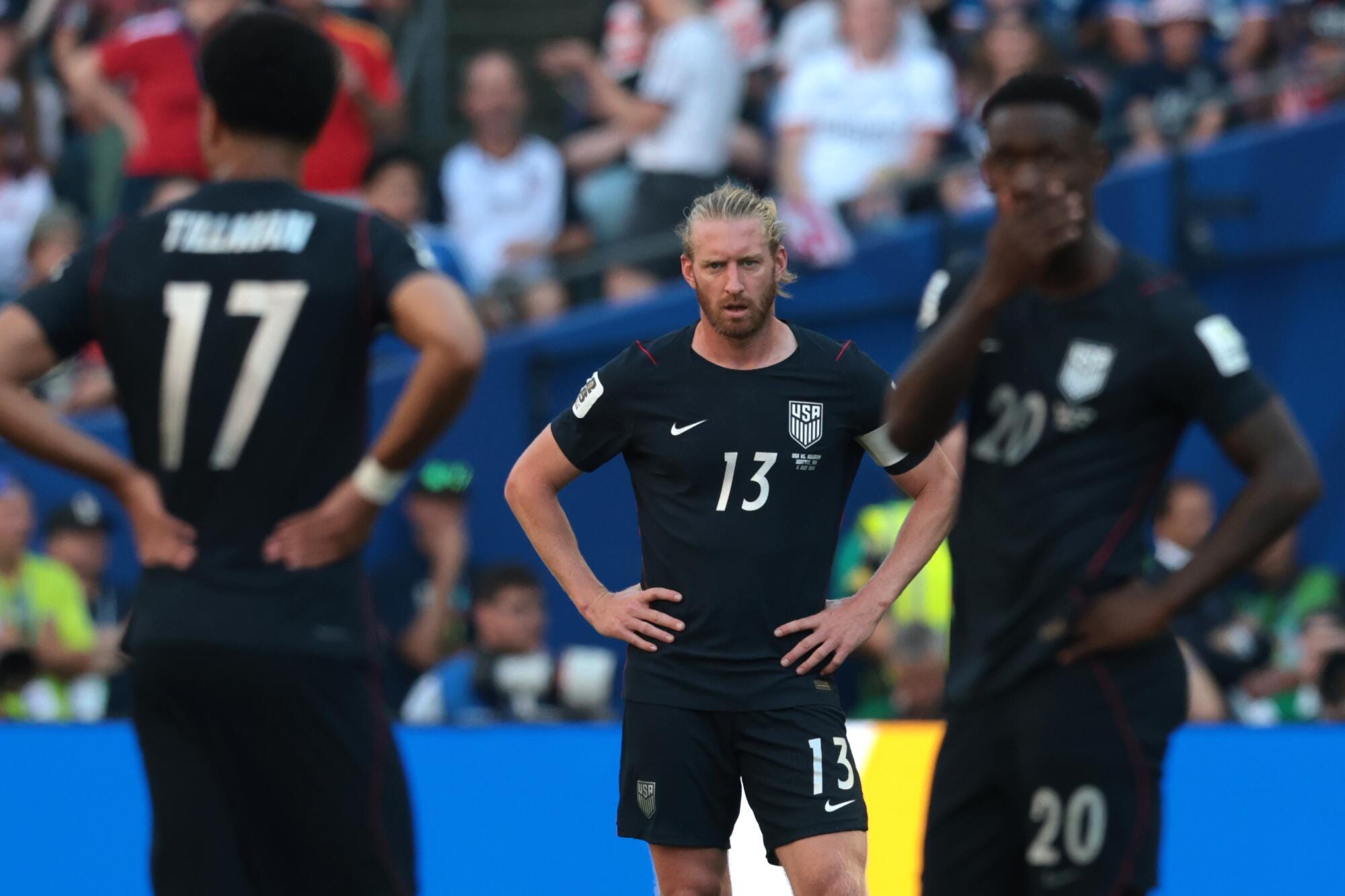
“Football-wise, there was just too little.” This was how Philip Sohmer, the commentator for Germany’s ARD television network, summarized the US team’s performance versus Belgium in the 2026 World Cup.
We should put this in context. The US has a long history of playing their guts out and never giving up in past World Cups. “Too little” is hard to hear.
I think back to the very end of the US versus Algeria in 2002 in their final group stage game. The other two teams were England and Slovenia. Forgive me. I am writing this just minutes after the Belgium match. I need this.
The US had been down 2-0. Maurice Edu had scored but that goal was called back due to a foul. Clint Dempsey has a goal disallowed due to an offside call. Not much time left. It is easy to give up. Tim Howard could have given up. Many players had stopped defending in order to go for goal. Howard goes for a massive throw. Donovan gets it to Jozy Altidore. To Dempsey. Blocked by Algeria’s keeper, Rais M’Bolhi. That’s it. It’s over. But Donovan had kept running and scored. I was in a bar in Saint Louis where everyone lost their minds.
German singer-songwriter Herbert Grönemeyer once wrote “Bigger, Faster, Further, America”. This drive, this refusal to give up, runs through our best projects and our worst ones. Fittingly, Grönemeyer’s song, “Amerika,” pairs gratefulness for the US’s role in defeating the Nazis and for post-war reconstruction alongside with an appeal to America to “please do not do any more” in response to the environmental devastation and reckless wars caused by the US.
Why these German examples?
I am a news junky and I end up seeing what some British, German, and Irish news and opinion writers are saying about the US and the World Cup. As a philosopher, I have a hard time laying out patriotism. If it is understood as an emotion, then it is fraught with risks. If it is a recognition that you have special moral obligations to people in your country– well, that is a plausible but not obvious claim. I can be both cosmopolitan and patriotic by desiring my country to take on big projects that make the world better. I can be both cosmopolitan and patriotic by steering my country to support universal human rights and to be hospitable to people from around the world.
What does this have to do with the World Cup? A lot. Our cities stepped up and they have made this tournament fun. I’ll give just examples in Massachusetts, where I live now, Our Governor declared a day in honor of Frantzdy Pierrot, who plays as a forward for Haiti’s men’s national team, and there was a rally at his high school in Melrose. Scotland fans decorated Boston with traffic cones and got the city to allow bars and restaurants to stay open late. Cape Verdeans put the party in watch parties in Boston, Brockton, and New Bedford. Millions of Americans learned where Cape Verde is and how to pronounce that name in a more Portuguese way.
I did not know if this part of my country was going to be allowed to express itself.
Would ICE agents bust up these events? Scotland fans spoke to me about weirdly written text messages that made them uncertain if they would be allowed to leave the airport. The Iranian national team was pointedly mistreated. The team was forced to fly for its matches to the US from Mexico on the morning of a game and weren’t allowed to sleep on US soil. Omar Artan, an experienced referee , was not allowed to enter the US just because he is Somalian. (The White House claims to have classified information about why he was denied a visa, but did not provide any evidence, this while repeatedly make falsified claims about Somalians and other Black people.)
One of the legal scalping sites posted a price for the Scotland vs Haiti match that I could maybe afford. I always thought I would go to one World Cup, and this one would not require a plane ticket. I wanted to cheer for Haiti, Scotland, and a hospitable USA.
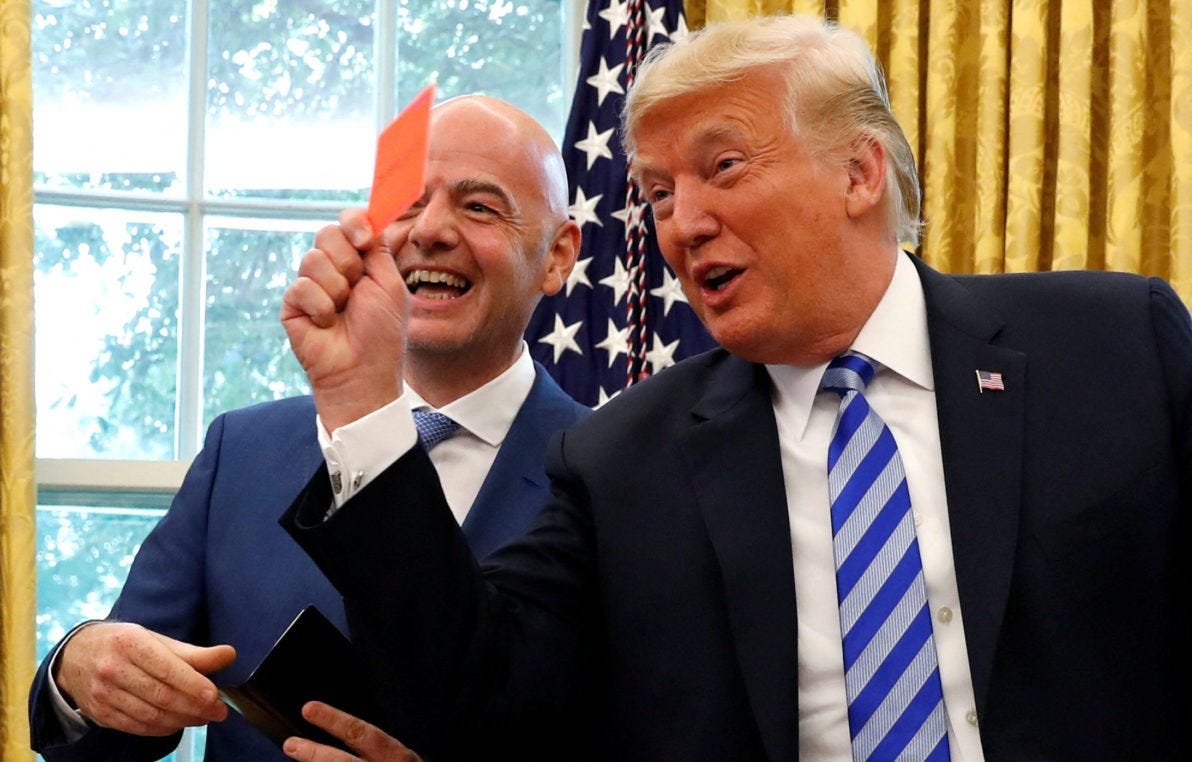
However, I could not get out of my head an image of Donald Trump getting the FIFA Peace Prize from Gianni Infantino and then bobbing around to “YMCA,” a song Trump just seems to like. I just wouldn’t be able to commit if there is a risk of being stuck at a rally for that man. At that stage, most journalists, had remarked on how little Trump had actually involved himself in the tournament.
Nevertheless, I knew I would only sort of cheer if I were at the Scotland vs Haiti game. I would wonder if I were building something up to benefit a war-mongering, kleptocratic, embarrassing, thuggish regime. I worried we would cheer for soccer and then Trump’s smug face pops up on a screen and he pretends it is for him. The price was too high for anything and definitely too expensive for that.
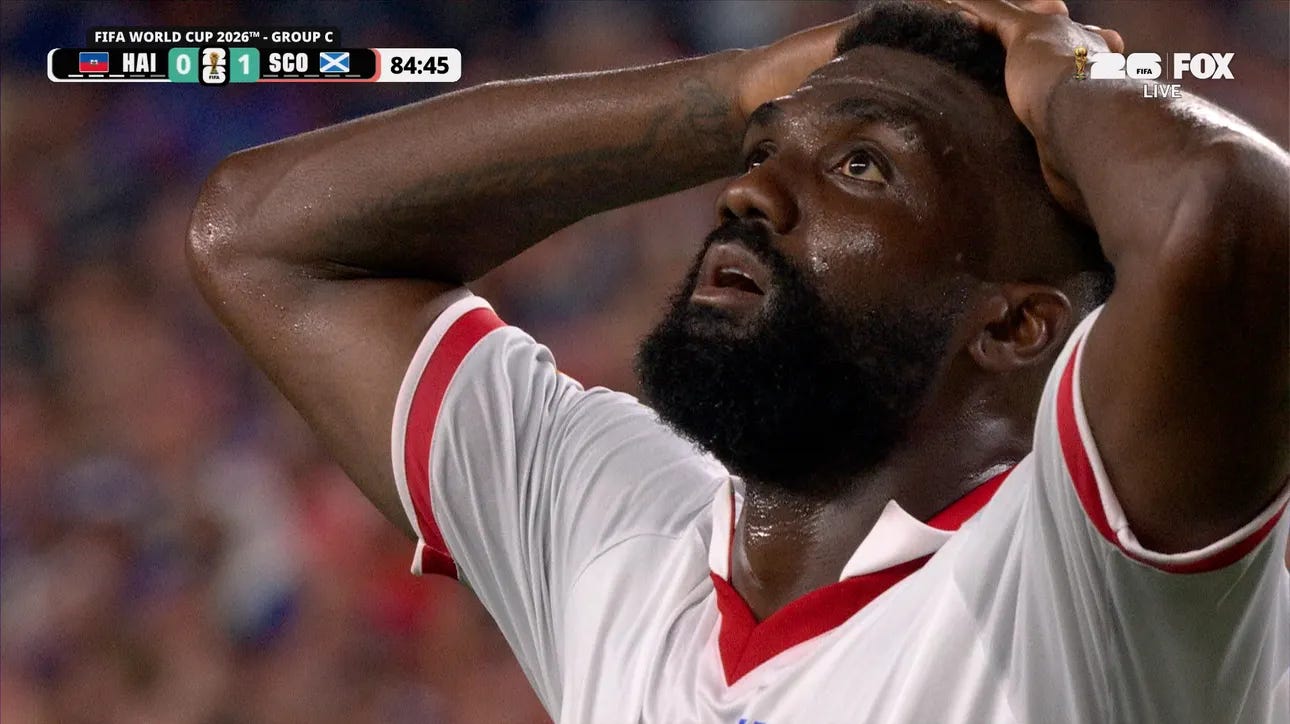
Watching on television gives me a chance to turn off a match if it turns into a Trump rally or an ICE raid.
What I really wanted was to see the US national team put in a US-style performance. We did it against Bosnia and Herzegovina despite being given a highly questionable red card, which removed our best-performing player, Folarin Balogun. I wanted to see the America I like. I wanted this part of our character noted in these overseas newspapers I read.
Instead, we looked nervous and damp. Ragged. What happened? A few days before, FIFA’s Disciplinary Committee suspended Folarin Balogun’s red card for the duration of the tournament, which allowed him to play against Belgium. This has never happened during a World Cup since 1970, when red cards were determined to come with an automatic suspension. (The Portuguese forward, Cristiano Ronaldo, was issued a red card in his team’s last qualifying match, but the card was “suspended” till after the tournament, to allow him to participate in group play at the 2026 World Cup. Players with celebrity would not have seen this happen.)
Trump claimed that he called Gianni Infantino to appeal for the suspension of Balogun’s red card. Texas Senator, Ted Cruz. thanked Trump for this at a press event. Right-wing media is doing what it does to give Trump credit.
Football associations and sports journalists in the rest of the world were bitter.
That underdog spirit stuff I was talking about earlier sits alongside another feature of America. We are run by rich people who just get to do whatever they want. While other people die in Vietnam, these guys get to claim bone spurs while playing a lot of golf. Trump was elected President after saying things offensive and racist things, that would rightly cost most people their job. The idea that the president of a host country could disagree with a referee’s decision, personally call the head of the sport’s governing body (three times) and seek to have it reversed is far outside how most of us expect international sport to function. Offhand, I cannot think of a comparable example at a World Cup.
Infantino is careful to point out that FIFA’s Disciplinary Committee works independently of him. No one believes him.
The point I want to make now is a simpler one. Here it is: Trump just ruined the US National Team’s World Cup run. He screwed it up when he claimed, “I am the one who got them to do it.”
But back to doing “too little.” When you play at a high level of competition, you have to be “all in.” There is a well-regarded essay in philosophy called “Throwing Like a Girl” by Iris Marion Young. Written in 1980, this essay is a masterpiece, running through Erik Erikson, Simone DeBeauvoir, and Maurice Merleau-Ponty’s phenomenological work. Young’s main purpose is to explain the alienated relationship most women have with their bodies in everyday life. I remember a student saying that the last thing she wants to do is think “Don’t throw like a girl” while playing. Then, the player is working with an image of failing to throw while throwing.
The U.S. players knew that Donald Trump had taken away their chance to banish the old idea that Americans do not really belong in soccer. Had the United States beaten Belgium, and had Balogun scored,we would not have shown the world our never-give-up character. Instead, our critics would have seen something else: our impunity for robber barons. The last thing any athlete wants is the feeling that, “no matter what happens on the field, I can’t truly win.” Even if the United States had advanced, the victory would never have been credited entirely to the team.
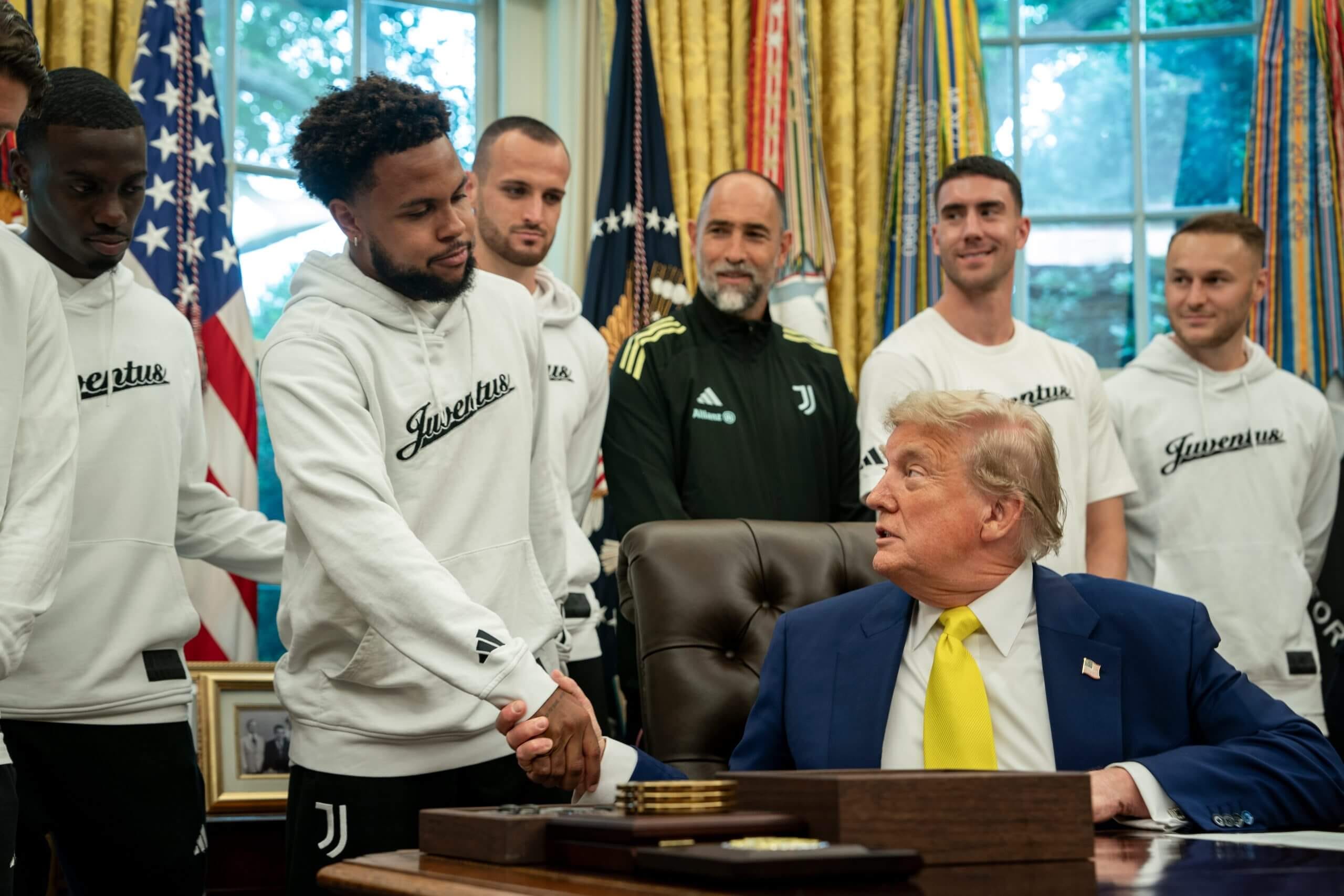
Midfielder Weston Mckennie ran hard and played hard like he always does. But he had to play alongside reminders of that very strange press event Juventus made him attend at the White House during the World Club Cup June 2025. Donald Trump talked about himself for a long time. US team member Tim Weah, and Mckennie’s teammate at Juventus, whose father is the former President of Liberia, was also there, being ignored.
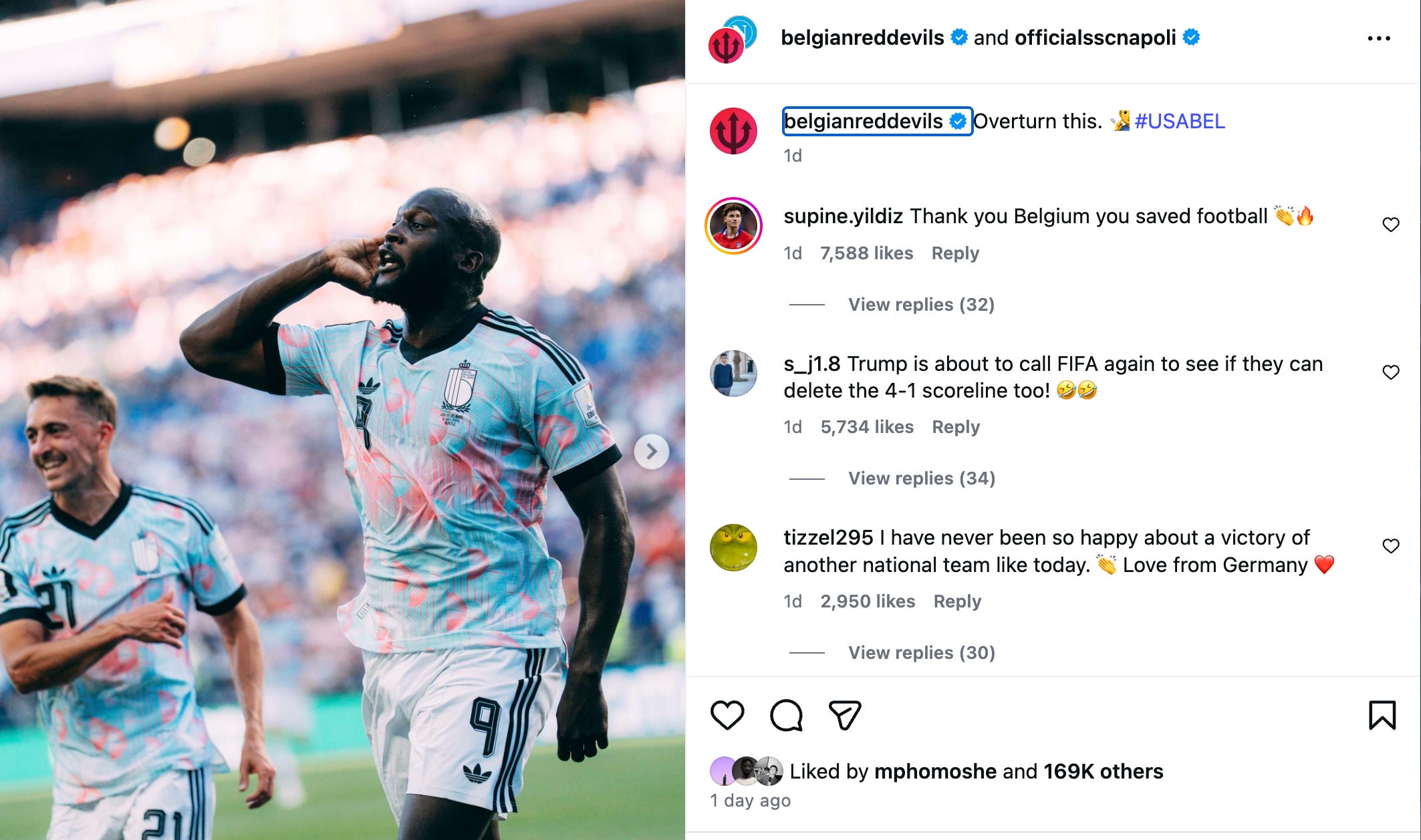
The US men’s national team did not go out like Cape Verde against Argentina. They did not go out like Mexico (our traditional rivals in the hemisphere) versus England. They looked like they were playing in jello from the first whistle. Belgium played professionally. They had a team pulled from Belgium’s colonial history.
I doubt Trump remembers saying that Belgium is a “hellhole” during his first run for President in 2016. He was amplifying a host of false claims about immigration destroying Europe. Tourists in Belgium just laughed. Some hellhole! Immigrants in Europe and the US have not laughed. Trump was not reaching into his own convictions. He was signaling his disrespect. Ghost stories are not fun when people start believing them. Team Belgium remembered all of this and played with purpose. Lukaku danced the “Trump Dance” after scoring Belgium’s fourth goal. Lukaku is Belgium’s all-time greatest goal scorer. Born in Antwerp, his parents came from Congo. His father played for Zaire. He scored the fourth goal, turning a win into a spanking. The official Belgian FA Instagram account posted after the match these two words: “Overturn This.”.
 | A guest post by
|