

Afrophobia
How to make sense of violence directed almost exclusively at Black migrants and their South African-born children and South Africans who look "too foreign."


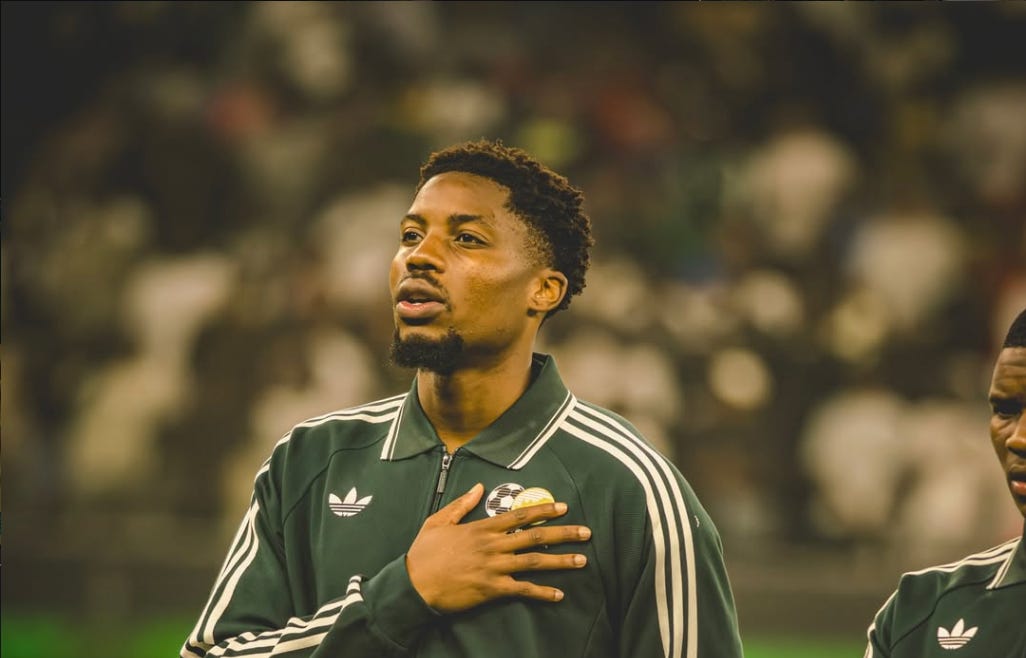
One of Bafana Bafana standout players before the team’s exit in the Round of 32 of the World Cup on Sunday, 28 June, was Ime Okon, the son of a South African mother and a Nigerian immigrant father. Okon told a reporter from News24, one of South Africa’s largest media outlets, that he has experienced xenophobia in the only country he has ever known as home.
In recent months, xenophobia in South African politics has surged again. Despite Okon’s standout performances at the World Cup, the media, teammates, political leaders, and the South African Football Association largely avoided mentioning his mixed national heritage. It may be because, before the tournament, some South African fans had objected to Okon’s inclusion in the squad.
Outside South Africa, however, other Africans did not ignore the issue. Earlier in the group stage, after South Africa’s 2–0 defeat to Mexico in its opening World Cup match, reaction across parts of Africa was blunt: “Mexico 2, Xenophobia 0.” The scoreline had hardened into a bitter metaphor, reflecting growing anger at South Africa’s treatment of migrants and refugees. (The violence has not been confined to foreign nationals. Some South Africans have been assaulted for being “too dark.” In Durban, Zulu-speaking protesters called a Venda-speaking police captain a kwerekwere - a slur for Black African migrants - and demanded his removal, insisting “KwaZulu-Natal is for Zulus.” Protesters similarly told a Black cabinet minister whose home language is Venda to speak Zulu. On the Cape south coast, a Tsonga-speaking South African was killed by a xenophobic mob; his mother later appeared on television to remind viewers that her son was South African. These are just few examples of a wider pattern.)
South African football leadership largely chose silence as the country became the subject of ridicule across the continent. When senior figures did speak, they avoided confronting xenophobia. Captain Ronwen Williams, playing victim, portrayed the team as unfairly targeted, inverting the moral question. Coach Hugo Broos, a Belgian national, also declined to criticize xenophobia when asked.
The issue was never just rubbing in South Africa’s loss to Mexico or its eventual exit in the Round of 32 (the internet was full of jokes about the South African footballers and coaching staff having to go home to prevent others from “taking their jobs”); it was that many Africans saw the result as symbolic of a country increasingly hostile to fellow Africans.
Although football is not discussed in the video below, that is part of the backdrop.
The World Cup revealed just how widely South Africa’s xenophobia is recognized beyond its borders. The reaction of many Africans to Bafana Bafana’s campaign, together with the treatment of one of the team’s own players by some South African fans, showed that everyone is aware of what is happening in the country.
In the video, my brother David Jacobs and I, who do occasional online commentary together as We’re Brothers, discuss the many roots of xenophobia in South Africa and explore how to make sense of a phenomenon directed almost exclusively at other Black people from elsewhere on the African continent.
 | A guest post by
|
Ime Okon, being born in South Africa and still experiencing xenophobia, is the detail that reframes everything for me. Because it tells you this isn't actually about immigration or legal status. What Afrophobia really exposes is how continental Blackness gets positioned outside the bounds of who deserves protection, regardless of your birth certificate. That's where the real interrogation needs to happen.